

Art is not just playtime for children—it’s a powerful form of communication, learning, and emotional processing. children’s approach to art offers deep insight into their developmental journey. This guide distills key takeaways and adds practical examples for instructors working with young artists.
1. The Process Matters More Than the Product
Young children are typically more engaged with the act of creating than with producing a polished final piece. A 4-year-old may swirl colors wildly on paper not to make a picture of a tree, but to feel how paint moves and blends.
Instructor Insight: Avoid overly structured tasks. Instead, offer a variety of materials and let children explore. Comments like ‘Tell me about what you made’ open up their thought process better than ‘What is this?’

2. Art as Symbolic Language
Children often represent people or experiences symbolically. A giant mother figure, for example, might reflect emotional significance rather than actual size.
Example: A child who draws a house with no doors or windows might be expressing feelings of fear or isolation.
Instructor Insight: Look beyond realism. Ask open-ended questions to understand what the symbols mean to them.
3. Emotional Expression Through Visuals
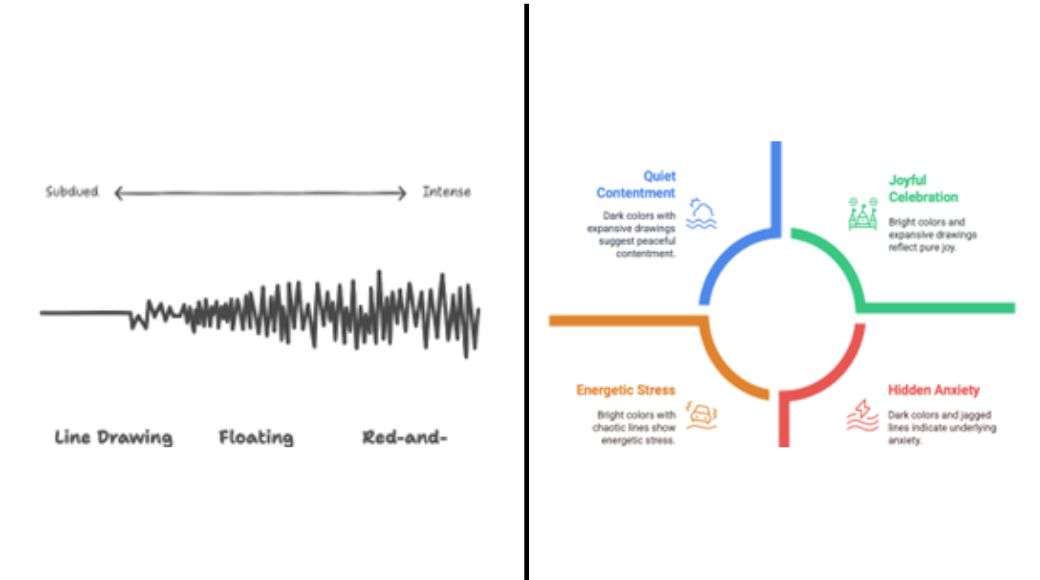
Kids might not have the vocabulary to express how they feel-but they can show it through art. A dark color palette, jagged lines, or chaotic composition can point to stress or anxiety,while bright, expansive drawings may reflect joy or contentment.
Instructor Insight: Use art sessions to check in emotionally. Especially in group settings, children who seem quiet might express themselves powerfully
through their work.

4. Art Fuels Creativity and Problem-Solving
Art encourages divergent thinking-the ability to come up with multiple solutions to a problem. A child drawing a dog with wings isn’t ‘ wrong,’they’re exploring ideas beyond the literal.
Instructor Insight: Encourage imaginative risk-taking. Prompts like ‘What if animals lived underwater?’ open up space for creative interpretation

5. The Learning Environment Shapes Artistic Growth
Children thrive artistically in environments that:
• Provide access to varied tools and materials
• Minimize judgment or correction
• Celebrate effort and originality
Instructor Insight: Curate a space with recycled items, textures, and colors. Display artworks without ranking them; every piece tells a story.
Real-Life Classroom Scenario
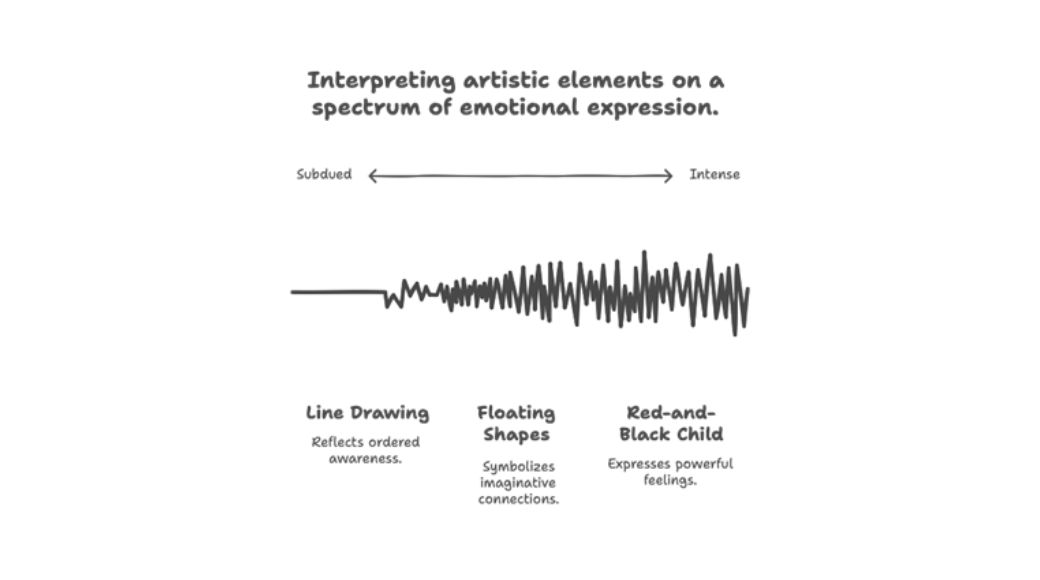
Ask your class to draw their families. One child draws stick figures in a line, another creates colorful, floating shapes, and a third uses only red and black. Each piece is a window into how they see, feel, and understand the world.
• The line drawing might reflect structure or birth order awareness.
• The floating shapes could symbolize imagination or emotional bonds.
• The red-and-black child might be dealing with strong emotions or simply fascinated by those colors.

Final Thoughts
Children’s art is a mirror to their minds-creative, emotional, symbolic, and deeply personal. As instructors, the goal is not to teach ‘ how to draw,’ but rather to nurture exploration, observe with sensitivity, and create a safe space for expression.
Let every drawing speak. And more importantly, let it be heard.